

In summer, a guided tour should not be judged only by the quality of the guide or the number of landmarks included. When the heat in Rome becomes intense, the route needs to balance exposure, shade, indoor spaces, breaks and realistic transfers. A tour that feels straightforward in April can become unnecessarily exhausting in August if it starts too late, crosses too many exposed areas or gives the group no proper recovery time.
This does not mean giving up the major sites or spending the whole trip inside air-conditioned rooms. It means reading Rome physically as well as historically: using the best hours for archaeology, moving towards museums and churches when the city is hottest, and allowing sunset to reopen streets and neighbourhoods that felt almost unwalkable at midday.
| ⚠️ August 2026 update In early August, Italy is going through another severe heatwave, the fourth of the summer. Rome is among the cities covered by the national heat-health bulletins. Before planning a long, exposed day, check the current alert and reduce strenuous outdoor activity during the central hours. |
The real problem is not heat alone: it is the wrong route
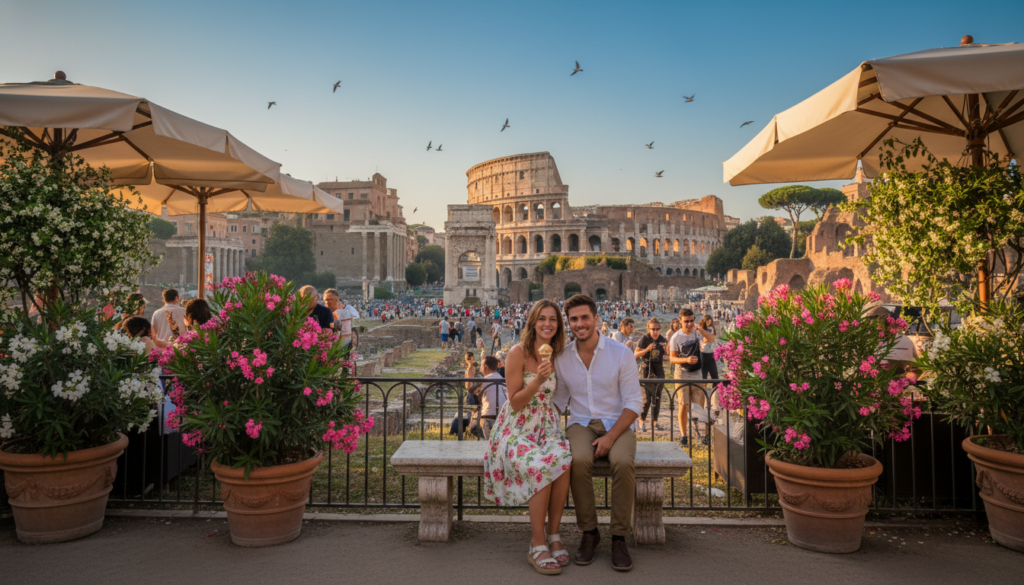
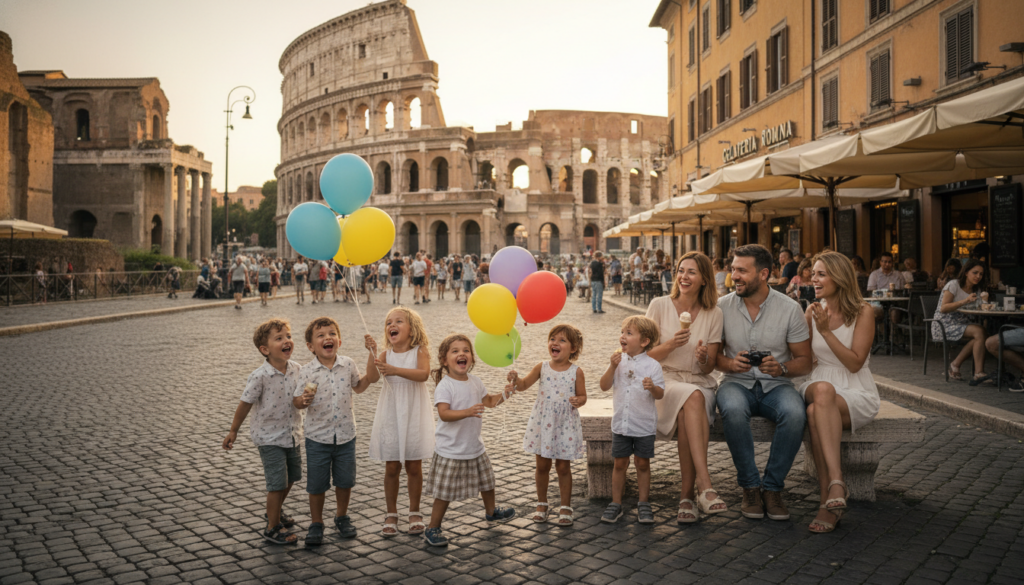
Heat becomes especially demanding in Rome when an itinerary keeps visitors on travertine, asphalt or archaeological ground with very little shade. The Colosseum, Roman Forum and Palatine Hill are exceptional, but they are not comparable to a shaded city walk: they require concentration, suitable footwear and a reserve of energy that disappears much faster in the middle of the day.
A well-designed guided tour should do more than simply “start earlier”. It should explain how much of the route is exposed, where the group can stop, whether there are climbs and what happens if the pace slows down. During a heatwave, the guide’s value is not only cultural. It also lies in reducing unnecessary movement and giving the day a sensible order.
For a wider overview of timing, breaks and areas to avoid during the hottest hours, see our Rome in summer guide, which treats heat as part of the itinerary rather than a minor inconvenience.
Rome does not heat up evenly
Thinking in terms of urban microclimates can be more useful than dividing the city only by neighbourhood. Archaeological sites, large paved squares and routes without trees absorb heat and offer few opportunities to rest. Museums, churches, historic villas, narrower streets and green spaces allow a different balance between storytelling and recovery.
This also changes the value of what you are seeing. The Roman Forum needs time: its layers, roads and ruins can look disconnected without explanation. If the group arrives already tired, the visit can collapse into a series of photographs. In a museum, by contrast, the pace is more stable and attention can stay focused on the works, provided the museum has been chosen for genuine interest rather than as a random escape from the sun.
Morning: use your best hours for the most demanding sites
The first part of the day should be reserved for places that require the most walking and exposure. Ancient Rome is the clearest example. A complete Colosseum, Forum and Palatine experience can take around three hours, so it should not be squeezed between a late breakfast and lunch on the opposite side of the city.
If archaeology is your priority, browse the Rome tours page and place the Colosseum experience inside a deliberately lighter morning: water, a hat, sun protection and a real break afterwards. Choosing an early slot does not remove crowds or security checks, but it prevents heat, waiting and fatigue from peaking at the same time.
Midday: replace walking with art, not with a random stop
Between late morning and afternoon, moving indoors should make cultural sense. Choosing a museum simply because it has air conditioning often leads to a distracted visit. Choosing a museum you genuinely want to see turns the hottest part of the day into one of its strongest moments.
A guided visit to the Vatican Museums and the Sistine Chapel is a good example of a dense indoor experience that needs its own energy and attention. It should not automatically be paired with a long outdoor walk before and after. The same principle applies to churches and smaller museums: they are not filler between two major tours, but a change of pace and a different way of reading Rome.
Late afternoon: when walking tours become reasonable again
Walking tours work better when the light softens and the historic centre becomes comfortable enough for a normal pace. At that point, the guide can focus on connections between streets, squares and neighbourhoods instead of shortening every stop to find shade.
The selection of walking tours in Rome includes cultural itineraries and major sites. In summer, however, look beyond the category name and check duration, meeting point, indoor sections and the actual starting time. A two-hour tour at 7 pm may be far more sustainable than a shorter one at 2 pm.
Late afternoon is also when Monti, the Jewish Ghetto, Trastevere and parts of the historic centre begin to feel like neighbourhoods again rather than exposed corridors between attractions.
Golf carts and food tours are not second-best options
When temperatures are extreme, changing the format does not mean lowering the quality of the experience. A golf cart reduces the amount of walking and links different areas while preserving the guide’s commentary and planned stops. It can work particularly well for mixed-pace groups, senior travellers or short stays where energy should not be spent entirely on transfers.
A golf cart tour in Rome will not always replace a detailed walking tour, but it can be the right choice on the hottest days or when the group has different mobility needs.
Food experiences can also become part of the itinerary rather than a reward after sightseeing. A guided evening route uses the more comfortable hours to connect food, urban history and local habits.
The food tours in Rome include tastings and neighbourhood-based experiences. In summer, their practical advantage is simple: they move the story of the city into the part of the day when walking, stopping and eating outdoors become pleasant again.
What a summer-ready guided tour should actually tell you
A useful tour page should provide more than duration and meeting point. In hot weather, travellers need to know how much time is spent outdoors, whether long sections have no shade, if breaks are possible, whether the route includes hills or uneven paving, and where the experience ends.
Group size matters too. Large groups move more slowly, need to regroup more often and may remain still in the sun while the guide waits for the last participants. A small group or private format is not automatically superior, but in extreme conditions it can reduce practical friction.
It is equally important to separate promises from what an operator can control. No one can guarantee zero waiting at sites with security checks. A reliable provider can, however, communicate clearly, avoid unrealistic overlaps and tell you what to bring. During a heatwave, transparency is almost as important as the itinerary itself.
A day that does not fight against Rome
A sensible summer day might begin with an archaeological visit in the early hours, continue with lunch and a hotel break or a scheduled museum, and reopen only in the late afternoon with a short walk, a golf cart or a food experience. This is not an “empty” day. It is a day in which each activity uses the most suitable part of the day.
The opposite approach is to combine the Colosseum, historic centre, Vatican and Trastevere without a real break. On the map it looks efficient. In practice, it creates delays, weak attention and the feeling of having crossed Rome without understanding it.
Choose guided tours in Rome that respect the trip
The current heat makes one rule especially visible: a guided tour works when the route matches the body, the available time and the interests of the people taking part. In August, that balance is not a minor comfort issue. It determines whether the story remains clear until the end.
To compare archaeology, museums, small groups, walking tours, golf carts and food experiences, start from the full selection of guided tours in Rome. Tours are operated by selected partners, while Do You Rome provides support before and after booking and can help you choose a format that makes sense for the weather, timing and pace of your trip.